
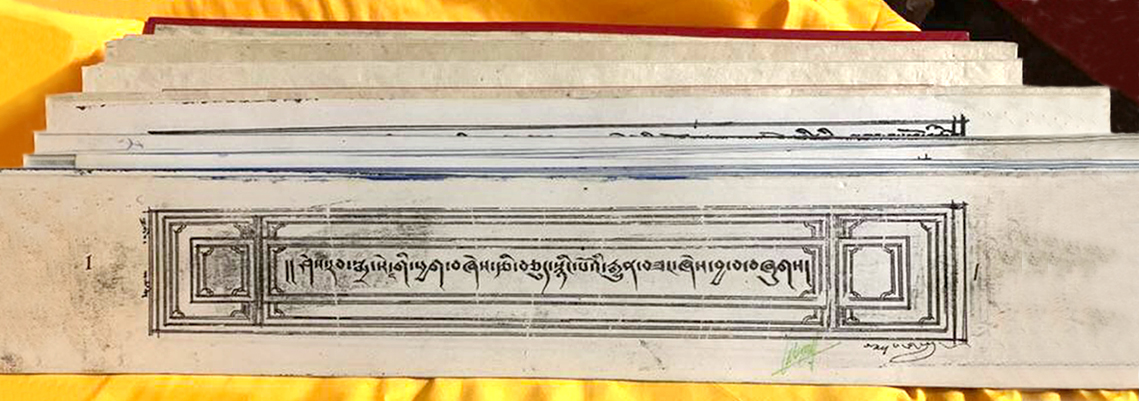
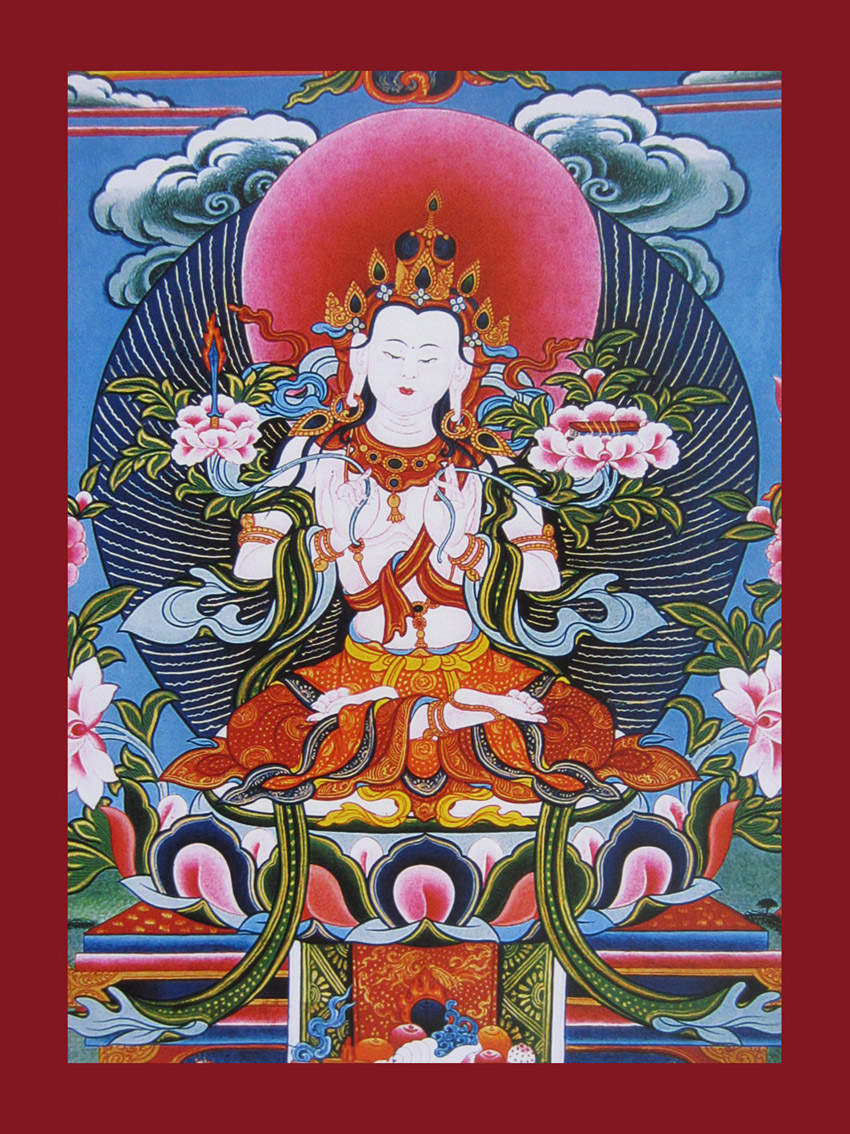
In the Bön tradition, Mawe Senge is associated with wisdom, clear knowing, memory, eloquence, and enlightened speech. The five wisdom practices help us understand how confusion can be transformed into clarity, discernment, balance, and beneficial action. This reflection explores how these teachings can support spiritual practice and daily life in a meaningful and grounded way.
In the Bön tradition, Mawe Senge is associated with wisdom, clear knowing, memory, learning, eloquence, and enlightened speech. This is not only the gathering of knowledge through study. It is the awakening of a deeper wisdom — the kind of wisdom that arises when the mind becomes more clear, the heart becomes more steady, and our true nature begins to shine through confusion.
For many people, wisdom can feel distant, as though it belongs only to great masters or advanced practitioners. Yet the teachings remind us that wisdom is not something outside of us. It is not something we must manufacture. It is already present in seed form within our own mindstream. Practice helps uncover it. Devotion helps open us to it. Reflection helps us begin to live from it.
This is one of the reasons Mawe Senge practice is so meaningful. It calls us back to the wisdom already within us.
The spiritual path does not ask us to pretend that we are already peaceful, already clear, or already beyond difficulty. We come to practice with fear, attachment, distraction, pride, grief, anger, insecurity, and confusion. The beauty of the teachings is that these very struggles can become the path.
What troubles us is not always separate from what transforms us.
The teachings on the five wisdoms show how reactive patterns can be purified into awakened qualities. Rather than rejecting our human experience, the path teaches us to work skillfully with it, until what once appeared as confusion begins to reveal its deeper wisdom nature.
The first wisdom is the wisdom of openness — vast inner spaciousness.
Ordinary mind often feels tight and crowded. It grasps at identity, story, memory, and fear. It tries to hold everything together through tension. Yet wisdom begins when there is space.
This spaciousness is not empty in a cold sense. It is living, awake, and expansive. It is the open nature of awareness itself. When we begin to rest in that inner openness, even briefly, we are less trapped by every passing thought or feeling. We begin to discover that awareness is larger than the turbulence moving through it.
The second wisdom is like a mirror.
A mirror reflects clearly. It does not cling. It does not reject. It does not distort.
When our minds are disturbed, we often do not see reality as it is. We see through the lens of old wounds, emotional reaction, and assumption. But as wisdom deepens, perception becomes cleaner. We begin to reflect life more clearly and react less impulsively.
This wisdom is especially important in speech and relationship. Before speaking, before concluding, before reacting, we can pause and ask whether we are seeing clearly or simply seeing through confusion.
The third wisdom is the wisdom of equality.
Ordinary mind is always comparing — better and worse, higher and lower, for me or against me. This habit strengthens pride, jealousy, insecurity, and separation.
The wisdom of equality brings balance. It helps us recognize the deeper sameness beneath outward difference. All beings seek happiness. All beings struggle with suffering. When we rest in this wisdom, the mind becomes less divided and the heart becomes more compassionate.
This wisdom also brings humility. It helps soften the inner pressure to prove, defend, or elevate ourselves. It allows us to meet others, and ourselves, with greater tenderness.
The fourth wisdom is discriminating wisdom — clear discernment.
Spiritual practice is not only about peace and openness. It is also about learning to recognize what is true, what is helpful, what is timely, and what leads more deeply into the path.
Discernment is not harshness or judgment. It is refined clarity.
Not every strong feeling is guidance. Not every attractive idea is truth. Not every impulse deserves action. Discriminating wisdom helps us recognize what is beneficial and what is not. It brings maturity to practice and depth to speech.
This is one of the great blessings of wisdom training: we become more able to respond from clarity rather than from emotion alone.
The fifth wisdom is all-accomplishing wisdom, wisdom expressed through action.
When wisdom ripens, it naturally begins to benefit others. It becomes the right word at the right time, the needed silence, the compassionate boundary, the prayer, the act of kindness, the steady response.
This is not frantic doing. It is aligned action.
All-accomplishing wisdom reminds us that practice is not only for our own inner experience. It must eventually become embodied in how we live, speak, serve, and care for the world around us.
We live in a time when many people feel mentally scattered, emotionally overwhelmed, and spiritually uncertain. There is so much information, yet so little wisdom. So much noise, yet so little inner clarity.
This is why the teachings of Mawe Senge and the five wisdoms remain so relevant.
They remind us that wisdom is not something distant or unreachable. It is cultivated through practice, through humility, through devotion, and through the willingness to transform our struggles into part of the path.
Little by little, confusion becomes spaciousness.
Reactivity becomes clear reflection.
Comparison becomes equality.
Uncertainty becomes discernment.
Insight becomes beneficial action.
This is the unfolding of wisdom.
If this teaching speaks to your heart, I warmly invite you to join me for class on April 26, 2026, where we will explore these wisdom teachings more deeply in practice, reflection, and spiritual community.
Whether you are new to this path or have been walking it for years, you are welcome.
May this wisdom continue to awaken within you, gently, steadily, and for the benefit of all beings.