
(What Most People Don’t Know About Tibetan Medicine in 2026 and Why It Could Change How We Think About Health)
By Beth Siegert, Lopon Bön Chong Ma, CPC, CPRC, ACC
Bön Dakini Healing, LLC
As healthcare continues to evolve in 2026, more people are searching for approaches that address not only the physical body, but also emotional wellbeing, resilience, purpose, and quality of life. Chronic stress, burnout, cancer, autoimmune disorders, anxiety, depression, and persistent fatigue have led many individuals to explore complementary healing traditions alongside conventional medical care.
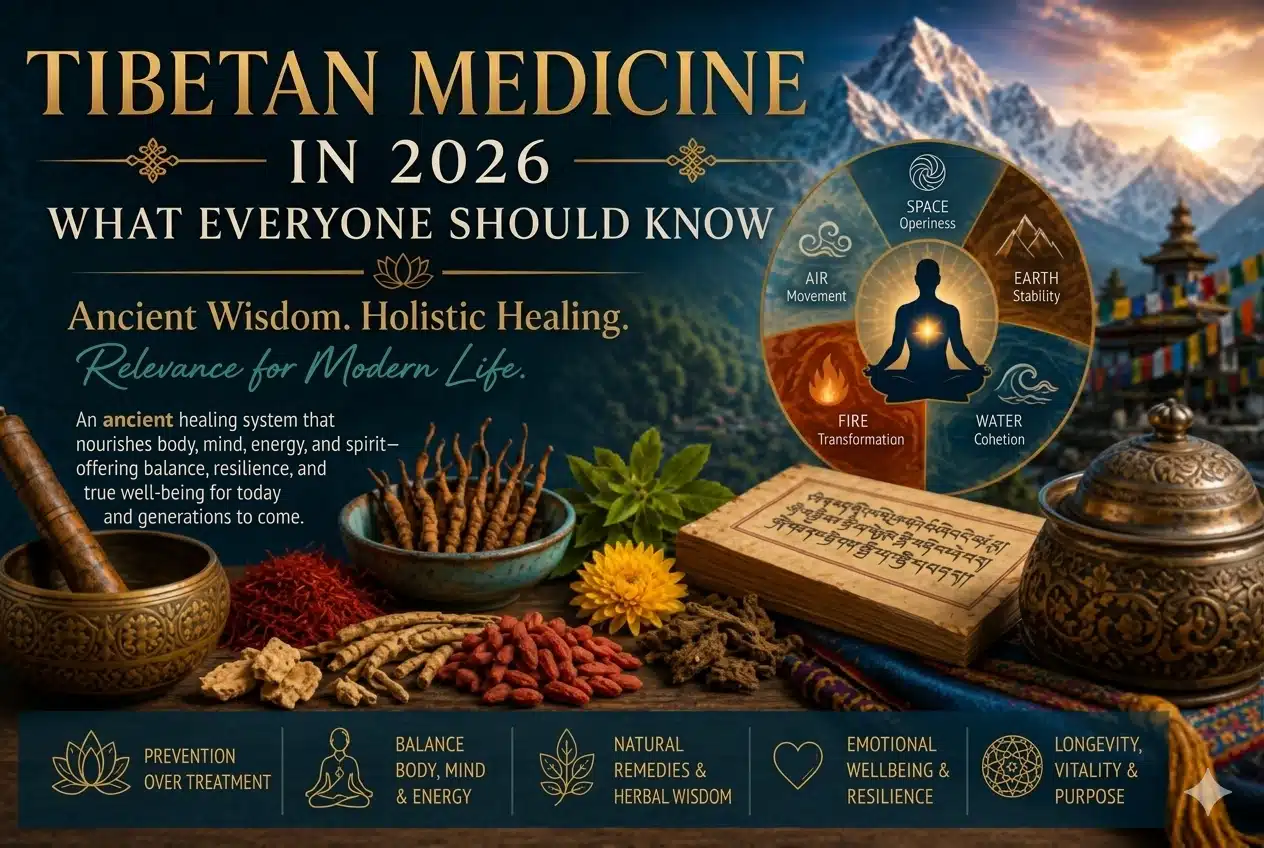
Among the world’s oldest healing systems is Traditional Tibetan Medicine, a sophisticated medical science that has been practiced for thousands of years throughout Tibet, the Himalayan regions, and Central Asia.
While many people have heard of acupuncture, yoga, or mindfulness meditation, Tibetan Medicine remains one of the least understood and most comprehensive healing traditions available today.
Here is what everyone should know about Tibetan Medicine in 2026.
Contrary to popular belief, Tibetan Medicine is not simply herbal remedies or spiritual healing.
It is a complete medical system with its own:
Traditional Tibetan Medicine developed through centuries of observation and clinical practice, integrating indigenous Tibetan knowledge with influences from ancient India, China, Persia, and Central Asia.
Its primary goal is not merely treating disease—it is restoring balance and supporting the conditions that allow health to arise naturally.
Modern medicine often focuses on identifying and treating disease.
Tibetan Medicine begins by asking a different question:
Rather than viewing symptoms as isolated problems, Tibetan Medicine examines the relationship between:
This holistic perspective recognizes that health emerges when these dimensions remain in harmony.
According to Tibetan medical theory, health depends upon the balance of three primary energies:
Associated with:
When imbalanced, Lung disturbances may contribute to:
Associated with:
When excessive, Tripa may manifest as:
Associated with:
When excessive, Beken may contribute to:
The goal is not to eliminate any of these energies but to maintain their healthy balance.
Long before neuroscience began exploring the relationship between emotions and physical health, Tibetan Medicine taught that emotional patterns influence wellbeing.
Three root disturbances are often described as:
These are not viewed as moral failings.
Rather, they are understood as conditions that can disturb the body’s energetic balance and contribute to suffering.
Modern research increasingly supports the connection between chronic stress, emotional distress, inflammation, immune function, and overall health outcomes.
One of the most valuable teachings of Tibetan Medicine is its emphasis on prevention.
Traditional Tibetan physicians have long taught that:
Rather than waiting for disease to appear, Tibetan Medicine encourages individuals to cultivate balance before symptoms become serious.
In today’s healthcare environment, this preventive approach is more relevant than ever.
Tibetan Medicine teaches that all life arises from the interaction of five elemental energies:
These elements are not viewed merely as physical substances.
They represent living principles that influence every aspect of human experience.
For example:
When these elemental forces become imbalanced, physical, emotional, and energetic symptoms may arise.
One area receiving increasing attention in 2026 is the Tibetan understanding of longevity.
In Tibetan healing traditions, longevity is not measured solely by years lived.
True longevity includes:
Ancient practices were developed to support:
These teachings remain remarkably relevant in a society increasingly focused on extending both lifespan and healthspan.
Within many Tibetan healing traditions, particularly those preserved within the ancient Bön lineage, practitioners work with concepts such as:
These principles describe subtle aspects of human vitality that influence health, resilience, and wellbeing.
When life force becomes depleted through chronic stress, trauma, grief, exhaustion, or major life challenges, individuals may experience symptoms that conventional testing cannot always fully explain.
Many contemporary practitioners are exploring ways to integrate these ancient insights with modern understandings of nervous system regulation, resilience science, and trauma recovery.
One of the biggest misconceptions is that Tibetan Medicine seeks to replace conventional medicine.
It does not.
Responsible Tibetan medical practitioners recognize the tremendous value of:
Increasingly, patients are seeking an integrative approach that combines the strengths of both worlds.
The future of healthcare may not be choosing between ancient wisdom and modern science.
The future may be learning how they can work together.
We live in an age of unprecedented technological advancement.
Yet many people continue to struggle with:
Tibetan Medicine reminds us that healing is more than symptom management.
It invites us to consider the whole human being.
Its teachings encourage us to cultivate balance, resilience, self-awareness, and connection not only for the treatment of illness, but for the enhancement of life itself.
As interest in integrative and preventive healthcare continues to grow, Tibetan Medicine offers a timeless perspective: health is not merely the absence of disease.
Health is the harmonious relationship between body, mind, energy, environment, and spirit.
That message may be more important today than ever before.
Beth Siegert, Lopon Bön Chong Ma is an Executive Life Coach, Drup Shen Ma (healer), and teacher within the ancient Tibetan Bön tradition. Through Bön Dakini Healing, LLC, she integrates traditional life-force restoration practices, contemplative resilience methods, and executive coaching to support individuals seeking greater balance, vitality, and personal transformation.